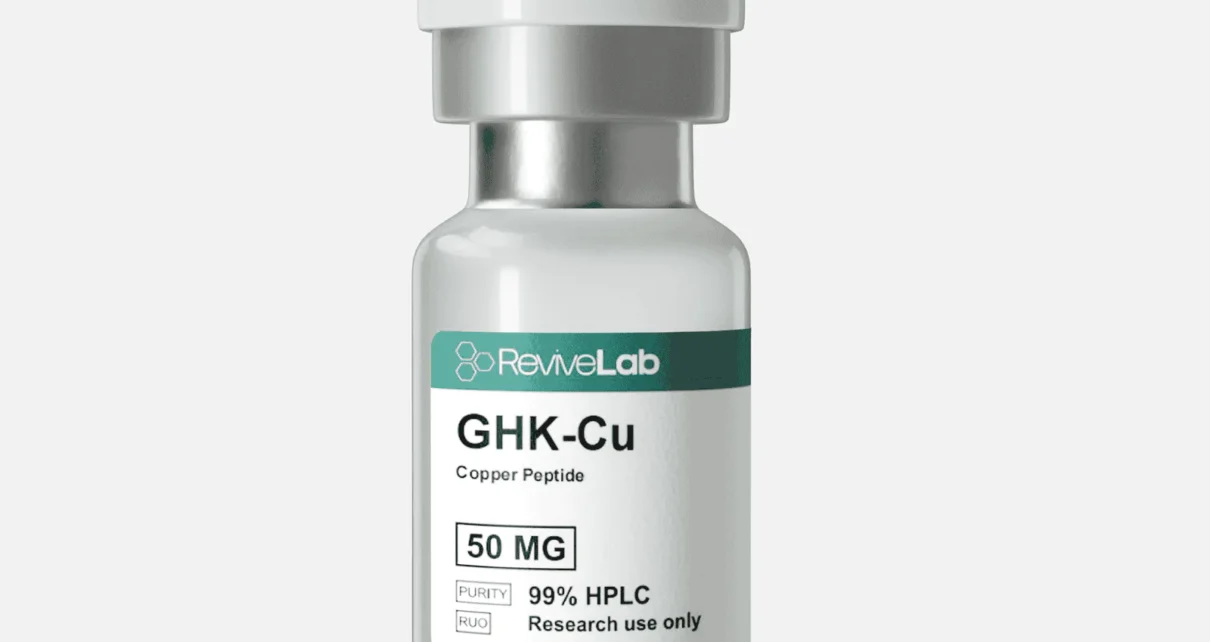
Not all research peptides are created equal, and with GHK-Cu, the gap between a high-quality compound and a substandard one can quietly invalidate months of work. Researchers who understand the science behind this copper peptide often invest significant time planning their studies, only to undermine their own results by sourcing from suppliers who don’t meet the quality bar that serious laboratory work demands.
Whether you’re new to copper peptide GHK-Cu research or expanding an existing protocol, knowing exactly what to look for before you place an order is just as important as knowing how to use the compound once it arrives.
Why GHK-Cu Quality Matters More Than Most Researchers Expect
GHK-Cu is a tripeptide, meaning it’s a chain of just three amino acids: glycine, histidine, and lysine, bound to a copper ion. That structural simplicity might suggest that sourcing it is straightforward. In practice, the opposite is true. The copper binding ratio, the purity percentage, the synthesis method, and the storage conditions during shipping all affect whether the compound you receive will behave the way the published research says it should.
GHK-Cu has been studied extensively for collagen synthesis, wound healing, anti-inflammatory signaling, antioxidant gene activation, and gene expression modulation across multiple tissue types. Those results came from studies using verified, research-grade compounds.
If your source material doesn’t match that standard, your data won’t match those results either. This is why sourcing decisions for copper peptide GHK-Cu research deserve the same rigor as every other part of your experimental design.
What to Check Before You Buy
Purity Percentage and How It’s Verified
The first number to look for is purity. Research-grade GHK-Cu should have a purity level of 98% or higher. Anything below that introduces contaminants that can interfere with cell signaling assays, inflammatory pathway measurements, and gene expression studies. A supplier who lists purity without providing documentation to support that claim is not a supplier worth trusting.
The verification method matters as much as the number itself. High-Performance Liquid Chromatography, commonly called HPLC, is the standard analytical method used to measure peptide purity. Mass spectrometry, or MS, confirms the molecular identity of the compound.
A reputable supplier will provide both, either through a Certificate of Analysis (COA) attached to each batch or available on request. If a supplier can’t produce an HPLC-verified COA for their copper peptide GHK-Cu Canada stock, that’s a clear signal to look elsewhere.
Certificate of Analysis: What It Should Actually Contain
A COA is not just a formality. It’s the documentary foundation of reproducible research. A proper COA for GHK-Cu should include the batch number, the synthesis date, the purity result from HPLC analysis, the molecular weight confirmation from mass spectrometry, and the storage conditions recommended for that specific batch.
Some suppliers provide a single generic COA that covers their entire product line rather than individual batch-specific documentation. That approach doesn’t meet research standards. Batch-to-batch variation is real in peptide synthesis, and a COA that doesn’t reference the specific batch you’re receiving tells you nothing useful about the compound in your vial. Always ask whether the COA corresponds directly to the batch you’re purchasing.
Copper Binding Ratio and Molecular Integrity
Why the Copper Component Is Non-Negotiable
GHK-Cu is not simply GHK with copper added loosely. The copper ion is structurally integrated into the peptide complex, and that integration is what gives the compound its biological activity. The copper binds to the histidine residue of the peptide chain and plays a direct role in the molecule’s ability to stimulate collagen production, activate antioxidant enzymes like superoxide dismutase, and modulate gene expression in fibroblasts and other cell types.
A compound sold as GHK-Cu that has incorrect copper binding, degraded copper content, or improper chelation chemistry will not produce the same outcomes documented in peer-reviewed research. This is particularly relevant for studies on wound healing, skin regeneration, and hair follicle stimulation, where the copper-dependent mechanisms are central to the biology being studied. Confirm that your supplier explicitly verifies copper content and binding as part of their analytical testing, not just the peptide chain alone.
Storage, Shipping, and Stability
How Handling Affects Compound Integrity
GHK-Cu is a stable compound under proper conditions, but improper storage or prolonged exposure to heat, light, or moisture during shipping can degrade its structure. Lyophilized powder form, which is freeze-dried, offers the best stability for long-term storage and transit. Peptides shipped in solution without temperature control are far more vulnerable to degradation before they even reach your lab.
A quality supplier will ship GHK-Cu in lyophilized form, sealed in a sterile vial, and will provide clear guidance on storage temperatures and reconstitution protocols. Cold chain shipping, using ice packs or dry ice depending on transit time, is a strong indicator that the supplier takes compound integrity seriously from the moment it leaves their facility to the moment it reaches yours.
Supplier Transparency and Research Context
What a Trustworthy Supplier Looks Like
Beyond the compound itself, the supplier’s overall approach to documentation, research context, and regulatory compliance tells you a great deal about the quality of what you’re buying. A supplier operating in the research peptide space should clearly state that their compounds are for laboratory use only, provide accurate scientific information about the compound’s studied mechanisms, and make their COA documentation easily accessible without requiring multiple requests.
Suppliers who make unsupported clinical claims, avoid documentation questions, or can’t explain their manufacturing and testing processes are not suitable partners for serious research. The best suppliers treat researchers as scientific professionals and provide the information needed to make sound sourcing decisions.
Source Smart, Research Smarter
Every data point your study produces traces back to the quality of the compound you started with. When you’re ready to buy copper peptide GHK-Cu in Canada from a supplier that meets the documentation, purity, and handling standards your research requires, look for HPLC-verified purity above 98%, batch-specific COA documentation, confirmed copper binding integrity, and proper lyophilized storage and shipping practices. The compound behind the science should be as solid as the science itself.